

Brian Schiff’s Blog
Injury Prevention, Sports Rehab & Performance Training Expert
 0
0
So, if you know me well at all, you know my first “law of exercise” is to ALWAYS know why you do what you do. I read a newsletter by Mike Boyle yesterday. He talked about being a cook or chef when it comes to exercise. He advises those with less than 5 years of expereicne not to mess with the recipe much so to speak. Since I have been doing this for 12 years, I consider myself to be much more of a chef.
I am constantly creating and tweaking my programming to deliver the best results. So, when I decide to use a training aid or piece of equipment, I have to believe in it 100%. My athletes and adult clinets alike love bands, vests, balls and training toys if you will.
But, I have to remind them (and myself at times) that the training aid exists only to further advance the original exercise or its desired outcome. Using these things just for variety is not really a sound plan. Today, I have a short video for you that reveals four progressive ways to use the Thera-band stability trainer.
I have used this in the rehab setting and in my fitness programs with great success. Please note – all of the exercises I show you should be mastered on flat ground first. After that, the stability trainer adds a great new dimension to the exercises and provides a very natural disturbance to balance and stability throuhg the kinetic chain that exists in sport and life.

Now, these are a just a small sampling of some of my favorite Thera-band trainer drills. The cool thing about this item is that it comes in three different levels of difficulty moving from green (easiest) to black (hardest). I tend to prefer the blue as it is middle of the road, making it easy enough for those without the skill of an Olympian and yet challenging enough for even the more advanced athletes. However, starting with the green may be necessary for those with ankle/knee instability or limited experience with stability training.
You can grab your very own blue Thera-Band trainer in my OpenSky Shop. Click the image below to head on over and get free shipping for a limited time as well.

Today I have some exciting news to share. I have recently partnered with OpenSky to make some of my very favorite training and rehab tools available online to you as well. Essentially, at OpenSky I am able to send my readers to my own personal supply shop.
In this shop, I will be showcasing products I believe in and use in my daily practice to help my clients achieve peak health and fitness. For now, I only have three products in my shop, so you are essentially only getting a “sneak peek” as I quickly pull the curtains back for you.
In a few weeks, I will have a grand opening of sorts with many more products to offer. So, what’s in the shop and how does it relate to me? Well, today, I wanted to briefly discuss the importance of using a rolling device to facilitate myofascial (soft tissue) release. Many of you know I run and train runners and athletes of all sports. One of the most common issues I see (especially in runners) is problems or pain related to trigger points or soft tissue tightness.
How do I solve this? When I injured my soleus training for the half marathon last fall, I used a roller to resolve pain and tightness before and after each run. Using a self roller such as the Tiger Tail is very effective in resolving these trigger points and areas of tightness. You will not be able to enjoy maximal strength and power production in your workouts if these trigger points are interfering or limiting you because of persistent pain.
You would like to think stretching alone would rid you of such issues, but this is just not the case. Once you effectively relieve the trigger points, the muscle balance is restored and you can get back to 100% again. So if you or someone you know always complains of tightness or soreness in one calf, hamstring, IT band, etc., this may be just the answer.
The best part the Tiger Tail is that it is very affordable and easily transportable if you are on the go. You control the pressure and location of the release. In just 5-10 minutes you will be on your way to feeling much better.
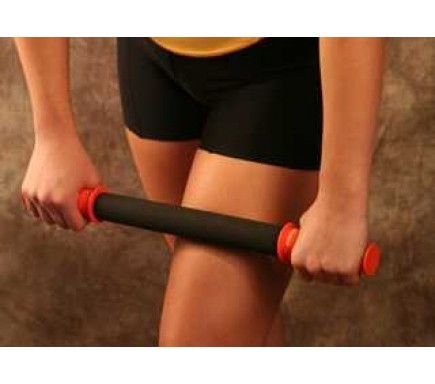

Be sure to check it out today at my store by clicking here or on one of the images above. I look forward to sharing more of my favorite training tools in the near future.

Whether you are for or against running, its popularity is likely at an all time high. People run to lose weight, stay fit, compete or simply escape from the stress of the world. Unfortunately, running often brings injuries for its participants.
So, what are the risk factors directly associated with injury? Researches in the Netherlands recently performed a prospective study with 532 novice runners (306 females and 226 males). The runners trained for a 4 mile event and were advised to run 3 times per week (Monday, Wednesday and Saturdays) at a comfortable pace.
They were randomized into 8 and 13 week training programs. There was no difference in findings among the different training groups so they were counted as one for the puprose of the study results. The results are interesting. Risk factors for running related injuries (RRI) in males included:
- Higher BMI
- Previous injuries – those with previous injuries are 2.6 x more likely to suffer an injury
- Type of previous sports activities – those participating in axial loading sports were less likely to be injured than those who participated in non axial loading sports (cycling and swimming for instance)
Predictors of RRI in females were:
- Increased navicular drop – this in turn leads to increased pronation and femoral internal rotation thereby increasing the risk of developing medial tibial stress syndrome
Some hypothesize that limited joint mobility leads to injury with the repetitive nature of running as force is dissipated unevenly along the kinetic chain. Interestingly enough, lack of range of motion in the ankle and hip were not found to be related to RRI in novice runners. Type ‘A’ personality influence in terms of pain resistance was also ruled out as contributing to sustaining an injury in this study.
What are the takeaways here?
- The key thing to see is that males and females have different risk profiles.
- Males that carry more weight may be comparatively at a greater risk for injury than females.
- Pronation and proper foot mechanics may be a bigger issue in females as they are much more prone to develop stress fractures
- Further research is needed to better predict female risk factors
- There are several limitations in this study such as: inconsistent training days, different running surfaces, different running speeds/intensity and weather to name a few
In my mind, it also further illustrates the need to fully rehabilitate injuries, prepare the body for events thru smart progressive axial loading and to target the hips with strength and power work in runners to better control femoral internal rotation and reduce ground reaction forces.
For more info, read the full article in the February 2010 edition of the American Journal of Sports Medicine. Stay tuned this week, as I will review another running research article discussing the impact of slope (hill) running on the body.
Well, with Turkey Day nearly upon us, I am gearing up for a 4 miler on Thursday morning. I have run 5Ks, 10Ks and half marathons, but this will be my first 4 miler. They give you a bottle of wine at the end of this one so it is pretty popular in my neck of the woods.
As I expand my own running and train more and more runners, I often find that many lack good single leg stability and hip strength. If you are a runner and not doing any strength training or simply focusing on traditional machine-based exercise, you need to shift gears and incorporate single leg exercises to maximize performance and prevent injuries.
In today’s post, I am going to give you an excellent progression of single leg hip drives or lifts to improve stance leg stability, gluteus medius strength and swing leg hip flexor strength. In addition, this exercise will improve knee stability and ankle proprioception thereby reducing excess tibial rotation/pronation along the way. That matters if you have experienced IT Band issues or shin splints along the way. The exercise sequence is as follows:
- Single leg hip drive holds (3-5 seconds)
- Supported single leg hip drive
- Unsupported single leg hip drive
- Unsupported single leg hip drive with resistance
- Unsupported single leg hip drive (unstable surface)
You should progress through this sequence of training to ensure best results. I suggest 1-3 sets of 10-15 reps of each sequence. The unstable or most advanced version is suitable for cross country runners, runners with poor ankle stability (chronic sprains or hypermobile) or those with poor closed chain mechanics from the ground up. I have included a few sample reps of these in the video below:

I hope you can put these exercises to good use. They are great for increasing stance leg strength and stability, while simultaneously improving swing leg strength and mobility. Happy running and have a great Thanksgiving everyone!
According to research, more than 70% of people in the US will experience at least one episode of low back pain (LBP) in their life. What is known about LBP and jogging? Keep in mind running is an extension activity in the spine. It also involves obvious repetitive compression/loading with ground impact.
A recent study in the Journal of Athletic Training (Sept./Oct. 2009) looked at the impact of lumbar paraspinal muscle fatigue and postural adjustments seen in running. Poor lumbar extension endurance has been linked to increased risk for developing LBP. In this study, researches looked at 25 recreationally active participants with a history of recurrent episodes of LBP and 25 healthy controls.

The testing process included:
- 5 minute warm-up on the treadmill
- 60 seconds of treadmill jogging at self selected pace
- 1 set of fatiguing isometric lumbar extension exercise
- Another 60 second treadmill jog at the same speed
For your reference, the fatiguing lumbar exercise consisted of repeated cycles of 10 second, gravity resisted isometric contractions followed by a 10 second rest on a lumber hyper extension chair. So, what did the results show?
In a nutshell, those with a history of recurrent LBP showed much less postural adjustment with the muscle fatigue compared to their healthy counterparts. The healthy subjects tended to exhibit a more forward trunk lean (1.1 degrees or less lumbar lordosis) and increase lateral bend during jogging gait.
On the flip side, those with recurrent LBP, they tended to stay more upright (0.2 degrees of additional lean on average). The authors feel this may indicate a coping mechanism due to core instability and a way to effectively stabilize the spine. Increased trunk lean would increase forces on the spine and intervertebral disc. The lack of change in the population with LBP may help explain excessive fatigue in the muscles that support the spine, pelvis and hips.
So what does this mean for those who have LBP? The postural change, or rather lack thereof, may be an Aha moment in regard to the need for improved core training for runners and athletes. It should also indicate that long term running or athletic competitions may increase the risk for more frequent LBP or a greater back injury.
There are three big takeaway messages here:
- Include low back extension endurance training in your workouts
- Integrate appropriate core exercises (planks, side planks, 3 dimensional exercise) to improve strength and stability of the hips, pelvis and spine
- Get professional evaluation and training from a knowledgeable fitness pro if you have LBP
 Back to top