

Brian Schiff’s Blog
Injury Prevention, Sports Rehab & Performance Training Expert
 0
0
Research has shown that strengthening the gluteus medius is clearly an essential way to reduce anterior knee pain and improve pelvic stability and function. The exercise I am sharing today is useful for improving hip strength and pelvic stability in a closed chain fashion.
In the video below, I demonstrate a very effective way to strengthen the gluteus medius and improve hip stability.
For a full description of the exercise, check out my latest column, Functionally Fit, by clicking here.
Well, Thanksgiving is upon us in 2011. I want to wish you and your family a wonderful holiday. In today’s post I will review a November 2011 article in the American Journal of Sports Medicine that looked at the effect of the Nordic hamstring exercise on hamstring injuries in male soccer players.
For those not familiar with Nordic hamstring exercises, see the photo below:
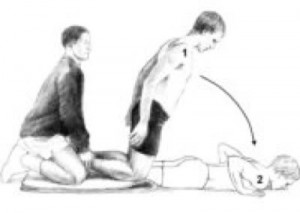
In this randomized trial, the researchers had 54 teams from the top 5 Danish soccer divisions participate. They ended up with 461 players in the intervention group (Nordic ex) and 481 players in the control group. The 10 week intervention program was implemented in the mid-season break between December and and March because this was “the only time of the year in which unaccustomed exercise does not conflict with the competitive season.
The trial was conducted between January 7, 2008 and December 12, 2008 with follow-up of the last injury until January 14, 2009. In the intervention group, all teams followed their normal training routine but also performed 27 sessions of the Nordic hamstring exercises in a 10 week program (as follows)
- Week 1 – 2 x 5
- Week 2 – 2 x 6
- Week 3 – 3 x 6-8
- Week 4 – 3 x 8-10
- Weeks 5-10 – 3 sets, 12-10-8 reps
- Weeks 10 plus – 3 sets 12-10-8 reps
The athletes were asked to use their arms to buffer the fall, let the chest touch the ground and immediately get back to the starting position by pushing with their hands to minimize the concentric phase. The exercise was conducted during training sessions and supervised by the coach. The teams were allowed to choose when in training it was done, but they were advised not to do it prior to a proper warm-up program.
And the results…..
Through my clinical practice and sports performance training, I continue to focus on eliminating core and hip dysfunction. I think many of the knee problems I see in runners and females are related to weakness in the glutes and small lateral rotators. There has also been quite a buzz about a recent article written in the Strength & Conditioning Journal on crunches and whether spinal flexion may actually be good for you.
This topic alone could take up several posts so, I will not delve into that today. However, as one who has experienced sciatica and disc injury firsthand, I probably tend to fall a little more in the camp of focusing on a neutral spine and resisting external forces as I feel this helps improve performance and reduce injury risk. In that vain, I have been continuing to develop my own core and hip stability progressions with my advanced clients/athletes.
I have been doing a series of posts for BOSU and PFP in my Functionally Fit Column. In my last post, I covered a 3D mountian climber with hip extension. In today’s post, I am covering a great core exercise with the BOSU Ballast Ball focusing on hip extension with the goal of improving shoulder, core and hip stability while promoting hip extension and disassociation.
In the video below you can check out the progressions (incline and decline)
Click here to read the full article on technique and application. The article reviews a regression for those not ready to tackle this quite yet. I think you will find this exercise challenging and rewarding.
I have had the pleasure of authoring a bi-weekly column for PFP’s online magazine entitled “Functionally Fit” for over three years now. This column gives me a creative avenue to display my specific training techniques and teach others how to build a better functional body in the process.
One of the greatest things about exercise is all the different options, variations and tweaks available to bring about a desired physical change in the human body. As Alwyn Cosgrove once said, “Exercise is like medicine.” By this, he means the right dosage and application is critical. I could not agree more.
As training and rehab continue to evolve and become even more intertwined, we as practitioners need to continue seeking ways to get more from our exercises. I personally use lots of different training tools in my trade, but I am always seeking to get the biggest return on my exercise investments. Today, I am sharing one such exercise with you, the 3D Mountain Climber with Hip Extension. Check out the video below:
In this video, I am working to improve shoulder, hip and core stability as well as strongly encourage hip disassociation. Many clients I train and rehab simply are asymmetrical or cannot disassociate their hips which leads to flawed movement patterns and leaks int he kinetic chain.
I used this exercise in our core training series we were doing with the Carolina Hurricanes in their pre-season conditioning sessions that we just recently completed. It is not easy, but delivers so much benefit for just one movement. In the video I display a BOSU balance trainer, but in my online column for PFP, I include a full buildup progression as well. Click here to read the column.
I think it is safe to say most would agree that deadlifts are great for building maximal lower body strength. Elite Olympic weightlifters are generally able to lift more loads in this lift compared to other free weight exercises. I know personally that I like to use it to develop lumbar extensor strength, as well as in place of the squat if I want to avoid spinal compression from the weight of the bar.
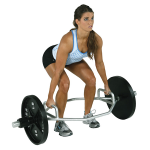
In the past I have heard some strength coaches say they don’t use a hex bar for deadlifts because it is not the same as lifting a straight bar. While not always sure exactly what they mean by that, I found a recent article in the July 2011 Journal of Strength & Conditioning Research very insightful. The researchers looked at the difference between straight and hexagonal bar deadlifts in submax loading situations.
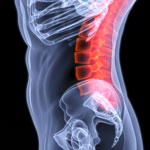
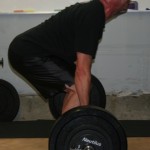
The concern with deadlifting has always been stress on the spine. The study notes:
“For world class athletes lifting extremely heavy loads, lumbar disk compression forces as large as 36,400 N have been reported.”
Lifters have long been encouraged to keep the barbell as close to them as possible to reduce the moment arm. The issue with the straight bar is that it can impinge on the body. Thus, the trap bar or hex bar apparatus was developed. The researchers hypothesized that the hex bar would reduce the joint movements and resistance moment arms. In addition, they hypothesized that larger forces would be produced with the submax loads.
The study use 19 male powerlifters and was conducted 3 months after their most recent competition where most were at the end of a training cycle aimed at matching or exceeding their previous competition performance. The subjects (following their own warm-up) performed HBD and SBD at 10, 20, 30, 40, 50, 60, 70 and 80% of his SBD 1RM. Twelve markers were placed on the body for biomechanical analysis.
 Back to top