Share   Subscribe to RSS feed

Brian Schiff’s Blog

Injury Prevention, Sports Rehab & Performance Training Expert

As someone who works with high level athletes and those aspiring to take their performance to new levels, I think it is important to understand power development and the real “why” behind the exercises we choose.  I also come at this from the side of a sports physical therapist who is working to get athletes back to their peak performance.

To that end, I am always looking for the most effective ways to train the neuromuscular system.  Finding the most “specific” exercises for our clients is important.  I thought I would provide a brief summery of a new article in the November 2013 Journal of Strength and Conditioning Research that looked to compare the neuromuscular characteristics of two types of jumps: hurdle and drop jumps.  In addition, the authors wanted to examine three types of landing techniques:

  1. Preferred – athlete instructed to jump with a technique that allows for jumping as quickly and high as possible
  2. Flat foot
  3. Forefoot (FORE)

The working hypothesis was that hurdle jumps would be more powerful than drop jumps (DJs) and that foot flat technique would decrease mechanical power.  The study included 25 subjects (male athletes) from Memorial University and during the jumps reaction forces, contact time, rate of force development (RFD) and lower limb EMG were measured.

All subjects did regular regular resistance training multiple plyometric drills with a typical volume of > 100 repetitions per session.  However, none of the subjects had done drop jumps before.  As such, this was the first test assessed to avoid fatigue.  Subjects stood on a force platform and were asked to perform a maximal CMJ.  Two trials were conducted with 1 minute of rest in between jumps.  The maximum CMJ height was used to establish the DJ and hurdle height.  The average flight time of the two trials was used to calculate jump height.

The order of DJ and hurdle jump tests was randomized with 5 minutes of rest between the jumps.  The athletes did a 10 minute warm-up of cycling at 75 W-60 RPM followed by 5 sets of 5 sub maximal hopping, 5 single submaximal CMJ and 2 maximal CMJ.  Only dynamic stretching was allowed during the warm-up to avoid any muscular power deficits created by static stretching.

Results

Contact time

  • Hurdle jump had a 36.9% shorter contact time compared to DJ
  • Preferred technique 29.1% shorter contact time than FLAT
  • Preferred technique had 9.6% longer contact time than FORE
  • FLAT 25.9% longer than FORE
  • Jump and landing type interaction 23.8% shorter ground contact time for DJ FORE vs. FLAT

Vertical ground reaction forces (VGRF)

  • Hurdle jump forces were 11% higher than DJ
  • FLAT techniques revealed 30.8% less reaction force than preferred technique and 40.9% less than FORE
  • DJ preferred technique had 14.9% more force than DJ FLAT
  • DJ FLAT had lowest force level and was 25.9% less than DF FORE

Rate of force development

  • Main effect of hurdle jump showed 46.3% higher RFD than DJ
  • FORE technique 11.3% higher than preferred and 45% higher than FLAT
  • Preferred technique 38% higher than FLAT
  • DJ preferred 35% > DJ FLAT
  • Hurdle jump preferred 40.9% higher than DJ preferred
  • Hurdle jump FORE 43.6% higher than DJ preferred
  • DJ FLAT was lowest for RFD

Leg stiffness

  • Hurdle jumps were 64% stiffer than DJ
  • Hurdle jump FORE had greatest stiffness
  • DJ FLAT was the least stiff technique

EMG Activity

  • Rectus femoris – HJ had 30% higher activity than DJ, eccentric phase highest, and FLAT higher than preferred and FORE
  • Biceps femoris – HJ 68.8% more activity than DJ, concentric phase highest, and preferred higher than FLAT
  • Tibialis anterior – FLAT had highest activity, eccentric phase highest
  • Gastrocnemius – Preferred 26.3% > FLAT, FLAT 47% < FORE, and concentric phase highest

Key findings of the study

  1. Preferred and FORE hurdle jumps were more powerful plyometric exercises than the DJ based on a shorter contact time, higher VGRF, RFD and leg stiffness
  2. FORE and preferred landings produced the best results for all mechanical power variables


Continue reading…

Soft tissue tightness and restriction in the latissimus dorsi is a common problem in overhead athletes, throwers, weight lifters and Crossfit participants.  I often educate clientele on self myofascial release techniques using a trigger point ball or foam roller. But, I also like using a partner technique with the Stick.

Begin in standing grasping the frame of a squat rack.  You may also elect to hold both handles of a TRX.  Next, slowly squat down and lean back allowing the shoulders to move into flexion.  Once in position, the trainer or workout partner will use the Stick to apply pressure and roll up and down along the latissimus especially working on the soft tissue near the shoulder.

latissiumus-mfr-with-stick

Perform this technique for 30-60 seconds and then switch sides.  Adjust pressure and location based on feedback from the client.

Application:

This exercise allows for soft tissue work in a stretched position for the muscle.  Alleviating tightness and myofascial restrictions will be especially helpful for pitchers, swimmers, tennis players and those frequently engaging in overhead squats, snatches, and other overhead lifts.  Optimal shoulder mobility will lower the risk of impingement.  in addition, adequate shoulder mobility reduces stress on the lumbar spine as lumbar hyperextension is a common compensation seen for poor shoulder mobility.

If a training partner is unavailable to perform this specific technique, consider using a tennis ball while standing with one arm elevated overhead and leaning into the ball.  Position the elevated arm/side of the body against the wall, and move the body/ball to perform compression and rolling over the latissimus.  Following soft tissue work, doing some active mobility exercise is recommended.

Click here to read an earlier blog entry and see an effective mobility drill to improve your lat flexibility.

In the past, I wrote a post about Crossfit and shoulder pain based on a 38 y/o male client of mine.  Click here to read that post. In my prior entry, I discussed differential diagnosis of rotator cuff and labral pathology, as well as my treatment approach for that client.

If you follow my blog, twitter feed or webinars, you know I treat a lot of Crossfit athletes.  Recently, I worked with a 25 y/o female suffering from marked shoulder pain that was keeping her out of the gym.

kettlebell_workout_single_arm_snatch_18295av-18295bu

Below are the key findings from her intake on 8/30/13:

  • Onset of left shoulder pain on 8/8 related to snatches
  • Right hand dominant
  • Intermittent pain if sleeping on her left side
  • Full AROM
  • Mild weakness with supraspinatus and external rotation on left
  • Positive impingement signs
  • Positive O’Brien’s test (labral test)
  • Positive sulcus sign bilaterally (indicates multi-directional instability or MDI)
Sulcus sign

Sulcus sign

Treatment intervention

  1. Rhythmic stabilization and PNF exercises
  2. Rotator cuff and scapular strengthening
  3. Closed chain stabilization training
  4. Game Ready (cryotherapy)
  5. Home program issued at visit #1

I saw the patient once per week and she did her home program for 4 weeks.  At week 4, we gradually began allowing her to do some modified gym workouts but still no snatches or full overhead work.  She was pain free at this time and all impingement/labral signs had resolved.  At this point she returned to some wall ball drills (limited height) but still no snatches.

The client’s final visit was on 10/2/13.  Her Quick Dash percentage of perceived shoulder dysfunction was now 0%.  She was symptom free, but more importantly she had a great understanding of how to modify her lifts, loads and volume based on her multi-directional instability.  She was now aware of how her instability impacts her shoulder in “at risk” positions and in the face of fatigue.  This brings me to the primary reason for this second post related to Crossfit and shoulder pain.

In my initial post, I focused on overuse and shoulder inflammation as a result of poor mobility, muscle imbalances and a lack of physical preparedness to do high intensity exercise like Crossfit.  On the other end of the spectrum lies the unstable shoulder.

Hypermobility and/or shoulder instability is a major problem for those doing Crossfit in light of the following:

  1. Many lifts and exercises put the shoulder in “at risk” positions
  2. Poor glenohumeral joint stability places more stress on the rotator cuff and long head of the biceps
  3. With the AMRAP approach and train to failure nature of the WOD, fatigue is a given and this means the stabilizing muscles that matter most will often fail leading to a much higher injury risk

Key Takeaways

  • My client had secondary rotator cuff and bicipital irritation related to primary instability
  • Rest and a combined stabilization and cuff/scapular strengthening exercise program was effective in resolving her symptoms within 30 days
  • High load/high volume overhead lifts and those that place the shoulder at end range pose a higher injury risk for those with MDI or anterior instability
  • Shoulder stability work trumps mobility work in those with shoulder instability – this often runs counter to traditional approaches that tend emphasize better mobility (one program does not fit all)

Closing thoughts

We must keep in mind that the shoulder is inherently unstable in order to allow us the freedom of movement necessary to perform the various tasks and exercise.  With that said, repetitive movements and lifts can create micro and/or frank shoulder instability over time.  Those with a history of shoulder subluxation/dislocation/instability are a high risk group to begin with. Adding high loads to failure places the shoulder in a fatigue and compromising state.  As a coach, competitor or health professional, we must remember that even the best intentions and coaching can fail us if the risk of a lift outweighs the reward.

As I have said before, anyone who decides to do Crossfit MUST get a proper assessment prior to starting to reduce injury risk. Ideally, this assessment would begin with a full FMS to help uncover any mobility or stability issues and asymmetry.  Keep in mind research reveals that females will almost always score a 3 on shoulder mobility and many may be hypermobile. Conversely, they tend to score lower (1 in many cases) on the trunk stability push-up.  Any pain with screening would necessitate a referral to a PT or MD for further evaluation.

Trainers cannot be asked or expected to catch multi-directional shoulder instability.  However, they can and should be aware of relative risk, anatomical tendencies and red flags that may predispose clients to injury.  For those wanting to be the best in the business, I would suggest developing a system for assessing clients and partnering with allied health professionals like me to incorporate best practices in their business.  Perhaps most importantly, trainers and coaches must be willing to adapt, limit, or eliminate exercise that does not fit the needs and abilities of the clientele.

The random nature of the WOD makes it difficult for unassuming clients to judge how best to fit in the Crossfit model if they have a dysfunction or injury concern.  My goal is always to empower people with knowledge about their body and sound advice for optimal training.  For those intent upon getting back to Crossfit after injury, I work hard to normalize their function and offer tweaks and modifications to prevent re-injury.  Prehab is a must for this population.  But in the end, some shoulders will simply not be able to handle the rigors and intensity of Crossfit.

I like to include exercises on this blog that are useful for rehab and fitness professionals as well as fitness enthusiasts who visit. This is a cool exercise that a colleague taught me.  I also recently shared this as part of my ‘Functionally Fit’ column for PFP Magazine.  It works great when doing partner workouts or if coaching a client.  We used it during our off season training for the Carolina Hurricanes and it is much harder than it looks on the surface.

Training clients to maintain core stiffness in athletic functional positions will improve performance and reduce injury risks for the spine and lower extremities. This exercise is an effective way to address postural stability, increase core strength and enhance kinetic chain proprioception

atlas-split-squats

Execution

Begin in a split squat position holding a stability ball overhead. The client maintains an isometric split squat while the coach/trainer provides directional perturbations in an attempt to disrupt balance and stability.

You may opt for several quick rhythmic perturbations or elect to use more sustained pushes (1-2 seconds in each direction) to challenge the client. Allow the client to reset to the desired position if he/she does lose balance in order to facilitate optimal motor patterning. Perform 30 seconds with the left leg forward, rest 30 seconds and then repeat with the right leg forward. Complete two sets on each side.

Be sure to observe asymmetries or deviations specific to either side as this will allow for better cuing and reveal energy leaks. Marking the desired distance between the front heel and rear foot toes with tape will ensure consistency for each trial side-to-side.

Application

This exercise is very effective in training kinetic chain stability and proprioception. Holding the ball overhead allows the trainer to challenge clients to resist movement in the sagittal, frontal and transverse planes through upper body driven loads and feedback. Additionally, the client must focus on maintaining an upright posture while the lower body musculature remains engaged.

Regression

For those with difficulty holding the ball overhead, consider holding the ball at shoulder height at first. Keep in mind the perturbations should be graded and not designed to push the client over or completely off balance.
One additional note to consider: you may opt to instruct the client to remain rigid throughout the drill or allow them to be relaxed and then respond with reactive rigidity when the perturbation comes.  Experiment with your clients and programs and see what you think!

So, one of my biggest pet peeves as a PT is seeing athletes hurt as a result of poor coaching and training.  Overuse injuries provide lots of clients for my practice.  While this is good for business, I would really like to help prevent these injuries.  I need your help.  It all starts with education and a willingness on the part of health and fitness professionals to advocate strongly for our young athletes.

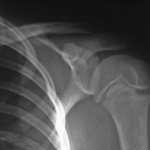
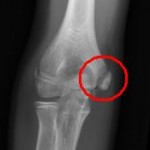
Consider the following scenario: a 14 y/o freshman left-handed pitcher presents for rehab to recover from Little League Shoulder. He was hurt on the second day of his high school’s fall conditioning program.  He was being forced to throw in excess of 200 feet.  His exact words were, “I was sore after day one, but I felt my shoulder explode on the second day of the program.”  Think this is a coincidence?  Hardly.

Another player from the same school (a sophomore right hander) is also in my clinic recovering from an avulsion fracture of his medial epicondyle that he too suffered on the second day of the same throwing workout.  I emailed the left-handed pitcher’s father with details about throwing biomechanics and how they decline with long distance throwing.  I also expressed my concern over the coach’s aggressive throwing program.  The father emailed back and said he too disagreed with the throwing program.  However, the coach simply told him his son had “not been properly coached” prior to getting to his program.  Are you kidding me?  Look at the images below to appreciate the type of damage done by overzealous throwing programs.

Coaches need to be more accountable to their training programs and philosophies.  Both of these players are missing no less than 3 months of baseball because the coach is clueless about the impact of aggressive long toss and how it may actually be detrimental to his players as opposed to actually improving their throwing technique/performance.

Click here for an article summary in JOSPT related to throwing biomechanics

So, how do we make a positive impact and prevent unnecessary injuries like the ones I have discussed?  I feel we need to look at the following strategies:

  1. Educate parents and coaches through talks and seminars
  2. Network with high school athletic trainers to ensure they have some feedback/input with respect to preventive training philosophies as well as a direct pipeline to coaches
  3. Reach the athletes directly through arm care screenings, FMS evals and professionally directed throwing programs
  4. Team with high profile baseball players or coaches who understand the game at the highest level and will spread the message in a positive and constructive manner
  5. Participate in CEU course for coaches and present on throwing programs, shoulder strengthening and mobility training

Based on these two cases, I am brainstorming ways I can become more of a “voice” in the baseball community in my area.  It is tough to convince pushy parents and misguided coaches that young kids don’t need to throw curveballs or that pitchers should probably not be forced to throw over 200 feet in hopes of increasing arm velocity.  But, we need to step up and make a difference or more young kids will be suffering from tendinitis, Little League Elbow/Shoulder, labral tears or other overuse injuries.

Click here for an abstract reference with respect injury risk and innings pitched per year

As a father, coach, educator and physical therapist, my personal mission is to make a difference in the lives of those around me. I know many may simply be unaware that there is a better or safer way.  As the emphasis on early specialization continues to grow in our country, now is the time to take action and help stop many of these injuries.