Share   Subscribe to RSS feed

Brian Schiff’s Blog

Injury Prevention, Sports Rehab & Performance Training Expert

I readily admit I have had an aversion to abdominal exercises that involve straight leg lowering since my days in pee wee football where we were forced to do lifts and holds a few inches above the ground.  Some will relate to a modern day version of this exercise known as “six inches.”

As someone with tight hip flexors and who has personally suffered from sciatica in the past, I am NOT a fan of abdominal training that exposes the lumbar spine to large loads and undue risk related to exercises that involve long levers (e.g. throw downs, scissors, etc) and place high shear force on the spine.

I was reminded of why I feel this way in a fitness class this past week.  I take a cycle/core class at my local gym and have done a traditional spinning class twice per week for 3 years.  After 45 minutes of cycle, we move to a fitness room for core.  I have done this new format for three weeks. This week we were asked to do a series of exercises which included “banana rolls.” If you are unfamiliar with this move, check out You Tube for some video demos.

While this exercise may be effective for core strengthening, I can honestly say as one who has never done the move before that trying to execute it as part of a continuous sequence of movements without rest between the moves was very hard to do with proper form.   The fatigued state encouraged using momentum and straining to simply get the movement done (not to mention the fact my greater trochanter was sore from the rolling on the hard aerobic floor).

The next day I woke up with low back pain.  My back has not hurt like that in years.  In light of the role the iliopsoas plays by virtue of its attachment on the lumbar spine, we must consider the impact of reverse muscle action and how it creates shear on the lumbar spine during movements that rely on stabilization with the legs extended against gravity.  Additionally, for those clients like me with muscle tightness, increased lumbar lordosis and a history of low back disorders, health and fitness professionals must consistently evaluate safety and efficacy as well as trying to challenge clientele in a workout session.

For all of these reasons, I increasingly rely on neutral spine anti-extension and anti-rotation training exercises in my programming for athletes and clients of all ages and abilities.  That is not to say I never do rotational or active movements.  They are appropriate given the right order, progression and demands of the respective individual. I just think we must consider form and risk versus reward in exercise programming.

The exercise video below illustrates how to use sliders in a tall plank position to accomplish great core activation and hip/shoulder stability without stressing the lumbar spine with long lever movements. Keep in mind that quality should override quantity in terms of deciding repetition schemes. Do not let the desire to fatigue clients cause form to suffer as this may increase injury risk.

For more specifics on the execution and progression/regression of this particular exercise, click the link below to read my most recent exercise column for PFP Magazine.

Tall plank shoulder circles

Suffice it to say I will not be doing banana rolls again. While I am not completely discarding the exercise, I do think it should be done in a non-fatigued state and taught incrementally if done at all. Most importantly, we as fitness professionals must always remember to program exercises based on fatigue and skill level, while carefully weighing risk versus reward in group or individual sessions.
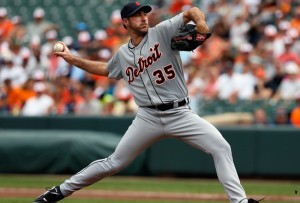
verlander

Photo from Bleacher Report

Shoulder surgery is a big concern for any professional pitcher.  I am currently rehabbing two MLB pitchers (one from a labral repair and the other from a Tommy John procedure and obviously not JV pictured above). They are doing great so far in their early rehab, but time will tell if they make it back to their pre-injury pitching levels.

Overuse injuries in youth baseball players is always a huge concern I have.  In fact, I speculate that early wear and tear may contribute to injuries seen down the road in HS, college or the pro ranks.  I know from coaching and observing that more youth coaches need to familiarize themselves with pitch count guidelines and rest/recovery recommendations that Little League baseball now endorses.

As a sports physical therapist who sees 12 year-olds with RC problems and torn UCLs and as a father/coach of a 10 y/o left-handed pitcher, I have a strong passion and vested interest in the welfare of baseball pitchers. While research does not equate increased injury risk with throwing curveballs and sliders to date per se, both of my MLB clients advise against it until athletes turn 14 or 15.

For  information on injury prevention and pitching guidelines for youth, check out this website:

http://www.asmi.org/research.php?page=research&section=positionStatement

Today’s blog post focuses on outcomes following surgery for elite pitchers.  The following information was just published in the Jul/Aug 2013 edition of Sports Health by Harris et al. based on literature review based on these outcome measures:

Primary = pitcher’s rate of return to sport (RTS) at the same level prior to injury

Secondary = rates of RTS regardless of level, performance upon RTS and clinical outcome scores

“Elite” was defined as throwing in at least one game in MLB, minor league (A, AA, or AAA) or all collegiate divisions.   Six level I-IV studies were included with enrollment from 1976 – 2007, and there were 287 elite male pitchers who underwent shoulder surgery with 99% on the dominant throwing shoulder.  Most pitchers (276) were professional with a mean career length of 6.58 years.  Post-operative clinical follow-up within these studies was 3.62 years.

Primary diagnoses treated:

  • RC tear = 120 (43%)
  • Internal impingement = 82 (30%)
  • Labral tear = 74 (27%)

Surgical procedures performed:

  • Labral repair (157) or labral debridement (99)
  • RC repair (29) or debridement (162)
  • Thermal capsulorrhaphy (63)
  • Subacromial decompression (42)

The statistics reveal more debridement of the labrum (61%) and rotator cuff (85%) versus repair.  This is not necessarily surprising given the desire to minimize surgical intervention and loss of motion.

Return to Sport Data

  1. The overall rate of return to sport was low at 68%.
  2. Mean time to return to competitive pitching in a game situation was 12 months (range = 9 -17)
  3. 22% of MLB pitchers never pitched again in MLB
  4. Only 14% returned to competitive pitching in the same season as labral surgery
  5. No one returned to competitive pitching in the same season after rotator cuff surgery
  6. Reynolds et al reported a median of 2 seasons of pitching after debridement of partial thickness cuff tears
  7. Mazoue and Andrews reported a mean of 0.7 seasons pitching (range 3 innings to 3 seasons) after mini-open RC repair

Performance declined for the 3 seasons prior to surgery and then gradually increased for 3 seasons afterward, but generally did not reach pre-injury levels.


Continue reading…

I work with several overhead athletes ranging from swimmers and tennis players to professional baseball pitchers.  One consistent issue I see is tightness in the anterior chest wall coupled with poor scapular activation and stability.  For that reason, I often turn to snow angel exercises.  I wanted to share two variations I have written on before.  The first version utilizes a foam roller.  The movement is performed throughout a full arc of movement upward and downward.

foam-roller-snow-angel-start

Top position

foam-roller-snow-angel-finish

Bottom position

Click here for more details on the execution of this exercise

This is an excellent exercise that can be integrated as part of a warm-up/movement prep session as well as used in recovery and the cool-down to address soft tissue tightness in the chest, facilitate proper posture and encourage scapular retraction and depression.

I often use this exercise in combination with pec minor myofascial release and thoracic spine extension mobilization on the roller.  It is a staple in all of my rehab and prehab programs with all of my overhead athletes.

The second version involves moving to an upright position and can prove more challenging.  The exercise is also designed to promote scapular stability.  When done properly, the client will demonstrate proper upward rotation (avoid tipping and winging of the scapula) on the ascent, and then emphasize recruitment of the rhomboids and lower trap to achieve proper downward rotation on the descent.

It can be a very fatiguing activity and somewhat frustrating for clients when starting out.  Be sure to cue them accordingly, and let them know it may not be easy to keep full contact.  It may also be necessary to utilize soft tissue mobilization for the pecs/lats as well as stretching beforehand to promote a more normal movement pattern.

Start position

Top position

Mid position

Mid position

Finish position

Bottom position

In this anti-gravity version fatigue becomes more of an issue, so emphasizing quality movement and using less repetitions may be indicated.  Do not push through any painful motion.

Click here for more details on the execution of this exercise

I always look for exercises that allow me to actively elongate traditionally short muscles while encouraging proper muscle activation of weak/poorly recruited muscles.  This exercise does just that.  If you are interested in the impact of pec minor tightness and shoulder impingement, check out the article from JOSPT below:

The effect of long versus short pectoralis minor resting length on scapular kinematics in healthy individuals

Weakness in the gluteus maximus and gluteus medius is often cited in contributing to patellofemoral pain, IT band problems, hip pathology and even back pain.  Furthermore, activating the glutes and minimizing tensor fascia lata (TFL) activation is preferential to avoid synergistic dominance with abduction exercises.  This is a common finding on my clinical exams.

myers-it-band-proximal

Photo from Myers

In the February 2013 issue of the Journal of Orthopaedic and Sports Physical Therapy (JOSPT), Selkowitz et al. examined several exercises to determine which ones had the highest gluteal-to-TFL muscle activation (GTA) index. The clam exercise proved to be the best with an index value of 115.  The second highest exercise was a sidestep with elastic resistance with a value of 64.

The other three exercises to score a GTA index of 50 or higher were: Unilateral bridge (59), quadruped hip extension w/knee extended (50) and quadruped hip extension with knee flexed (50).  Below is the clam executed against a wall as described in the study referenced.

clam

Clam with resistance

Additional research done by Wilcox and Burden (published in the May issue of JOSPT) suggests that a neutral spine alignment and 60 degrees of hip flexion is the best position for gluteal activation during the clam.  This study was done without resistance but offers additional insight to positioning.  I try to mimic this hip flexion angle in the standing single and double leg versions I employ with mini-bands as part of my gluteal activation series in the clinic as well.

mini-band-er

Single Leg ER (left)

In the Selkowitz study, participants performing the sidestep were instructed to step to the left replacing 50% of the distance between the feet in the start position and follow with the right leg also stepping at this 50% increment.  This was then repeated to the right to return to the starting position for a total of 3 cycles.

This exercise has one of the lowest TFL activation and reinforces proper frontal plane mechanics and can be used with clients and athletes to reduce anterior knee pain and injury risk.  To increase resistance and/or difficulty, bands can be moved to the ankles or a band can be applied above the knees and at the ankle.  In my practice, I typically have clients sidestep for 10 yards in one direction (using the 50% rule) and then repeat moving back to the other side for 10 yards.

side-step

Sidestep

Another option is to perform the sidestep exercise with a staggered stance.  For example, lead with the right leg forward moving to the right and vice versa.  Again, small steps replacing 50% of the original stance is best to ensure quality work.

staggered-sidestep

Staggered sidestep

For additional information on execution and application for these exercises, click on the links below for the online columns I wrote for Personal Fitness Professional Magazine:

Resisted side lying clam

Sidestep with elastic resistance


As a parent, coach and sports physical therapist, this is a topic I am both passionate about and often confronted with.  I remember growing up in a small town where I played a different sport every season.  No one played year round soccer, baseball or AAU basketball – it was not even an option for those around me.

Now, I live and work in a competitive sports-minded environment where I see 13 y/o baseball pitchers with elbow and shoulder pain, 13 y/o female soccer players with ACL reconstructions, and too many adolescents suffering from overuse injuries like anterior knee pain and tendonitis.  I witness coaches teaching 10 and 11 year olds to throw curve balls, hear athletes tell stories about how they are strongly encouraged or pressured to play only one sport if they want to excel and make a team, and parents who are pushing their kids hard at an early age in pursuit of college scholarships.

Is it all worth it?  In a short answer – NO.  In a recent article in the May/June 2013 issue of Sports Health, Jayanthi et al. performed a comprehensive search of PubMed and OVID from 1990-2011, gathering articles discussing sports specialization, expert athletes, or elite versus novice athletes including original research articles, consensus opinions, and position statements.

Click here to read the abstract

My own personal bias and opinion is that we should encourage youth to participate in multiple sports/activities and not pursue one sport or activity until they reach high school.  I believe there is so much to be gained in terms of coordination, neuromuscular training, recovery and building general athleticism that gets lost with early specialization.  However, I see many young athletes swept into early development programs and travel/AAU teams that naturally discourages or eliminates time/opportunities for other activities.

With that said, I will readily acknowledge that certain sports/activities (gymnastics and playing an musical instrument for example) do require an early commitment in terms of practice and skill mastery if one is to reach elite status.  So, what should we as health and fitness professionals be telling our clients?  How intensely do they need to train and at what age is it okay to focus on one sport?

I think we need to know what the evidence we have says and how we can best use knowledge to make meaningful change in society.  In addition, we need to evaluate the mental and physical injuries that are occurring with the choice to specialize at a very young age.  Consider that participation at age 6 and under has increased from 9 to 12% from 1997 to 2008.

So, for us to make a difference we need to investigate and scrutinize how we coach and train young athletes and become an advocate for their long term health as well as short term success.

Here are the key bullet points from the article I referenced above:

  • Coaches are the most influential in beginning intense training and the decision to specialize
  • Less than 1% of athletes 6-17 years old achieve elite status in basketball, soccer, baseball, softball or football
  • Early diversification is more likely to lead to success based on multiple studies and may lead to more enjoyment, fewer injuries and longer participation
  • Early diversification is more likely to lead to success based on multiple studies and may lead to more enjoyment, fewer injuries and longer participation
  • Data currently suggests enjoyment of sport and intrinsic motivation predicts attainment
  • Exposure is the most important risk factor for injury and there is a significantly increased risk for injury when participating > 16 hours/week
  • Cumulative match exposure also carries a significant injury risk
  • Prospective 10 year analysis of 481 youth baseball pitchers reveals a 3.5x increased risk for injury when pitching more than 100 innings per year

What about burnout?  Consider the following:

  • Swimmers who specialized early spent less time on the National team and retired sooner
  • Minor league hockey players (boys) who dropped out started earlier and spent more time in off-ice training than those who continued to compete
  • One retrospective review revealed that 1 out of 5 elite athletes reported injury as the reason for quitting
  • In the end, the authors conclude that some specialization is necessary to attain elite skill, but the exclusion of other activities should be delayed until late adolescence.

To foster diversification, we must do a few things in sports medicine:

  1. Educate parents, coaches and athletes on the injury risk and facts about the impact of early specialization
  2. Promote the benefits of diversification in terms of joy, diminished  stress to excel, athletic development and physical recovery
  3. Remind everyone involved not to take sports too seriously as only a very select few will move on to elite status, and instead encourage them to enjoy competing, learn to be a good teammate and reap the other rewards in sports (discipline, sportsmanship, learning to overcome adversity, working hard to achieve a goal, etc) that last well beyond a trophy presentation or game

I was just asked a few days ago by the parent of a 9 year old baseball player if I thought it was good for him to play multiple sports since he is pretty good in baseball.  I encouraged this mother to have him do as many sports as he can for the next several years.  Why put so much pressure on kids and expose them to increased injury risk?  Every family and athlete needs to make their own personal decision, but for those who do opt for early specialization, I want to make sure I can help educate them on cross training, rest and recovery to minimize the risk for burnout and injury.