Share   Subscribe to RSS feed

Brian Schiff’s Blog

Injury Prevention, Sports Rehab & Performance Training Expert

The News and Observer (our local paper here in the Triangle) recently ran a great story on overuse injuries in young athletes.  I firmly believe this is one of the fastest growing injuries I see in the clinic and in many cases it is preventable.  One of the biggest issues now is this commonplace idea that gifted athletes should play the same sport year-round to get ahead.

I remember growing up as a kid and playing football, basketball and baseball in the fall, winter and spring.  While AAU basketball and Legion ball existed, most kids were still playing multiple sports.  Over my 15 years as a physical therapist I have witnessed several of these one sport stars see their playing time and bodies take a hit due to injury.

The American Orthopedic Society for Sports Medicine (AOSSM) and the American Academy of Orthopedic Surgeons (AAOS) state that overuse injuries account for nearly half of the 2 million injuries seen among high school athletes each year.  While soccer and swimming seem to send many athletes into PT, any repetitive throwing or overhead activity bears considerable risk for an eventual shoulder or elbow problem as well.  Some of the common injuries I typically see are:

  • Patellofemoral pain
  • Shin splints
  • Rotator cuff injury
  • Bursitis
  • Shoulder instability
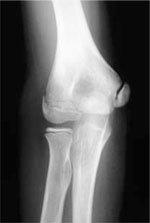
  • Little League elbow
Little League Elbow (medial epicondylar apophysitis)

Little League Elbow (medial epicondylar apophysitis)

These injuries are just some of the most common ones I see.  In the article, the reporter focused on baseball and throwing.  With that in mind, consider research published in the American Journal of Sports Medicine this past February from renowned surgeon James Andrews that revealed players who pitch more than 100 innings in a calendar year are 3.5 times more likely to be injured.

He goes on to say that “these injuries are the result of a system that prepares genetically gifted athletes to play at the highest levels, but eliminates most players because their bodies cannot withstand such intense activity at such an early age.”  Sadly, he told the reporter that in 1998 he performed the Tommy John procedure on 5 kids high school age or younger, while in 2008 he did the same procedure on 28 children in the same age range.  This injury is usually caused by throwing too much too soon.

Consider the following data on suggested pitch counts per game (source James Andrews, MD & Glenn Fleisig, MD):

  • 8-10 y/o = 52 plus/minus 15 pitches
  • 11-12 y/o = 68 plus/minus 18
  • 13-14 y/o = 76 plus/minus 16
  • 15-16 y/o = 91 plus/minus 16
  • 17-18 y/o = 106 plus/minus 16

Unfortunately, I can personally relate to this blog post and story.  I was a promising young pitcher up until the point I threw my arm out in travel baseball at age 13.  The pain got so bad in my arm I could barely throw a ball 10 feet.  I remember the orthopedic surgeon telling me that I could not throw again the rest of the summer.  The pain (and memory of it) was so bad I elected to focus on position play and not to pitch again until my senior year of high school.  At that point, my arm was no longer the same as I had missed three years of practice and development.  Now, I too had become one of those kids whose body was never the same.

So, as a rehab and strength & conditioning professional, I want to help educate and promote better awareness to athletes, parents, coaches, trainers, AD’s, ATC’s and anyone who is involved in the care and training of young athletes.  Fortunately, people are taking positive steps to reduce overuse injuries.  One great initiative is STOP – Sports Trauma Overuse Prevention and you can learn more by clicking here to visit their website.

In the end, we must continue to educate everyone that the old motto of “No Pain, No Gain” is NOT the way to handle overuse injuries as this mentality may ruin the careers of young athletes or lead to an otherwise preventable injury and/or premature musculo-skeletal damage.  Pain truly is a warning signal the body gives us to detect mechanical problems and make changes in our training/activity level until we sort out the cause and solution.  I hope you will join me in supporting this mission and working hard at making sports fun, safe and free of overuse injuries for young athletes of all ages in the years to come.

References – The News & Observer – May 15, 2011

Often, people assume hip and knee pain begin and end in those respective joints. While this can be the case, the truth is the ankle may also have a say in the matter. In my practice, I often see gait deviations, IT band issues, patellofemoral pain and many other issues related to ankle stiffness or soleus issues.

In assessing athletes, runners and weekend warriors, I often pick up asymmetries when measuring closed chain ankle dorsiflexion. I have even observed people who have active dorsiflexion within normal limits while seated on a treatment table, but once they become weight bearing things change. Even small differences can dramatically affect the body as the brain will find a way to get the motion it needs to squat, run, lunge, etc.

This often involves a compensatory pattern at the knee and/or hip joint. So, to that end, I recommend several strategies to improve mobility. I am currently doing a three part series on this for PFP magazine to provide some effective exercises to improve ankle and soleus mobility. Click here to read the latest column.

Below is a sample video of the wall touches I use to improve ankle motion after mobilizing the soft tissue.

Typically, I advocate doing 1-2 sets 10-15 repetitions.  Using the wall allows clients to have tactile feedback and a target to focus on.  This is a simple, yet effective way to gain motion in a loaded closed chain fashion as the hip, knee and ankle flex together in running, landing, squatting, lunging, etc.

If you are curious how I assess side-to-side differences, click here to read my initial column on assessment.  I hope these tools enhance your training and/or those you work with.

Unearthing the cause of anterior knee pain and ridding our patients and clients of it is one of the never ending searches for the “Holy Grail” we participate in throughout training and rehab circles.  I honestly believe we will never find one right answer or simple solution.  However, I do think we continue to gain a better understanding of just how linked and complex the body really is when it comes to the manifestation of knee pain and movement compensations.

We used to say rehab and train the knee if the knee hurts.  It was simply strengthen the VMO and stretch the hamstrings, calves and IT Band.  Slowly, we began looking to the hip as well as the foot and ankle as culprits in the onset of anterior knee pain.  The idea of the ankle and hip joint needing more mobility to give the knee its desired level of stability has risen up and seems to have good traction these days.

Likewise, therapists and trainers have known for some time that weak hip abductors play into increased femoral internal rotation and adduction thereby exposing the knee to harmful valgus loading. So, clam shells, band exercises and leg raises have been implemented to programs across the board.

theraband-single-leg-hip-rotation-finish

Single Leg Resisted Hip External Rotation

As a former athlete who has tried his hand at running over the past 5 years, I have increasingly studied, practiced and analyzed the use and importance of single leg training and its impact on my performance and injuries.  As I dive deeper into this paradigm, I continue to believe and see the benefits of this training methodology for all of my athletes (not just runners).

As a therapist and strength coach, it is my job to assess movement, define asymmetries and correct faulty neuromuscular movement patterns.  To that end, I have developed my own assessments, taken the FMS course, and increasingly observed single leg strength, mobility, stability and power in the clients I serve. Invariably, I always find imbalances – some small and some large ones.

What are some of the most common issues I see?


Continue reading…

It is common knowledge in the medical community that treating patellofemoral joint pain (PFJP) is one of the most frustrating and difficult tasks to complete as there appears to be no standard way to do so.  While clinicians strive to find the right recipe or protocol (I don’t believe there is just one by the way), researchers press on to find more clues.

A new article released in the April 2011 Journal of Orthopaedic & Sports Physical Therapy seeks to bring clarification to a particular exercise pattern commonly used in rehab circles.  The three exercises they looked at were:

  • Forward step-up
  • Lateral step-up
  • Forward step-down

In the study, the authors looked at 20 healthy subjects (ages 18-35 and 10 males/females) performing the separate tasks with motion analysis, EMG and a force plate.  The goal was to quantify patellofemoral joint reaction force (PFJRF) and patellofemoral joint stress (PFJS) during all three exercises with a step height that allowed a standard knee flexion angle of 45 degrees specific to each participant.

Key point:  Previous research has been done to indicate that in a closed chain setting, knee flexion beyond 60 degrees leads to increased patellofemoral joint compression and this may be contraindicated for those with PFJ pain or chondromalacia.  Also keep in mind that most people with PFJ complain of more pain descending stairs than ascending stairs.

patellofemoral-force

In the study, the participants performed 3 trials of 5 repetitions of each exercise at a cadence of 1/0/1 paced with a metronome.  The order of testing was randomized for each person.  The authors used a biomechanical model to quantify PFJRF and PFJS consisting of knee flexion angle, adjusted knee extensor moment, PFJ contact area, quadriceps effective lever arm, and the relationship b/w quadriceps force and PFJRF.

Now on to the results……


Continue reading…

Many people like to do lunges in the gym.  Many people do them wrong.  Some simply do not know proper form, while others have mechanical issues preventing them from executing proper form.

Unfortunately, many clients struggle to keep the knee in line with the foot, and the knee often caves inward.  Even with verbal, visual and tactile cues, they may still struggle to master the proper form due to flexibility and strength imbalances. This may have to do with limited ankle mobility, but for the purposes of this post, I want to address the hip.  More specifically, people often lack mobility, stability and strength in the hips.

I recently wrote two columns for PFP Magazine featuring two exercises I use to clean up lunge form:

  1. Torso Rotational Lunges
  2. Diagonal Hip Flexor Lunge Step

The torso rotational lunge is great for integrated muscle activation of the gluteus medius, while I utilize the diagonal hip flexor lunge step to address hip flexor tightness and limited thoracic spine mobility.

Torso Rotational Lunge

Torso Rotational Lunge

Diagonal Hip Flexor Lunge Step

Diagonal Hip Flexor Lunge Step

In these columns, I specifically review regressions and progressions.  So, whether you train clients or simply want to take your lunges to the next level, check out the full columns online at PFP below:

Click here for the Torso Rotational Lunges

Click here for the Diagonal Hip Flexor Lunge Step

Looking for more cutting edge training tips and rehab/injury prevention strategies?  Subscribe to my members’ only Training & Sports Medicine Update available at www.BrianSchiff.com.