Share   Subscribe to RSS feed

Brian Schiff’s Blog

Injury Prevention, Sports Rehab & Performance Training Expert

six-pack-shortcuts-kettlebell-cardio-routines

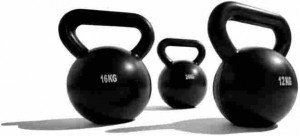
Kettlebells are very popular training tools these days.  I find them useful in many ways – improving grip strength, core activation, asymmetrical loading, etc.  With that said, I also feel with movement flaws and/or improper technique, they carry an inherent injury risk.

It is interesting to note that some people find swings to be very therapeutic and good for their back, while others who are capable of lifting very high loads with traditional lifts find them to be irritating to the spine.  So why is this?

If you are like me, knowing the “why” or “cause and effect” behind exercise is very important.  I am not one to blindly use an exercise without knowing its intended purpose and then quantifying risk vs. reward and results. So, it was with great interest I read Stuart McGill and Leigh Marshall’s recent article on kettlebell swings, snatches and bottoms-up carries in the NSCA Journal of Strength & Conditioning Research (Jan 2012).

Click here for the abstract.

While the sample size is small, I think the article provides some gems in regard to training given no one has really looked at spine loading during various swings and carries.  The authors used surface EMG to record muscle activation of the back, hip and core muscles throughout the various exercises – swing, swing with Kime (abdominal pulse at top of the swing), swing to snatch, racked carry and bottoms-up carry.

Without going into all the tiny details, I wanted to share what I consider to be some key takeaways for rehab and training:

  • Unlike traditional low back extension exercises such as lifting a bar or squatting exercises, the swing creates a relatively high posterior shear force (namely L4 on L5) in relation to the compressive load – this may explain why some powerlifters have no issues with heavy dead lifts but are bothered by swings
  • Both compressive and shear forces were highest at the beginning of the swing
  • From a compressive standpoint loads with a 16 kg kettlebell (swing) are less than one-half of that of lifting 27 kg on an Olympic bar and these would seemingly pose a low relative injury risk
  • KB swings do appear to require sufficient spine stability in this shear mode to ensure that is is a “safe” exercise selection
  • Those with back pain develop movement flaws and the authors report one of the most common is to move the spine under load instead of the hips – so instead of hip hinging, injured clientele are more apt to shift or bend the spine leading to repetitive and harmful forces
  • A modified approach to swings with careful cueing and progression is suggested for clinicians
  • The bottoms-up carry poses more challenge to the core musculature likely due to requiring more grip strength (thus stiffening the core per McGill in Ultimate Back Fitness & Performance) as well as necessitating more control to carry it, hence making it a good choice for training in terms of activation of these muscles

So, in my mind kettlebell training (like any other form of training) requires proper form, movement assessment and an intimate knowledge of the client’s medical and training history.  In addition to that, we must carefully scrutinize execution of the exercise and deliver appropriate feedback and analysis.

While maximal shear occurs at the bottom, I cannot help but wonder about the potential impact of tight iliopsoas muscles given their unique relationship to the lumbar spine and reverse muscle action.  It would be interesting to know if those with a greater anterior tilt and tightness are more likely to experience higher shear forces or potential back soreness over time.

This brings the discussion back to quality of movement and movement assessment.  In my mind, adequately assessing the hips (flexibility, strength and stability) is also a key variable in determining how best to approach integrating the swings.  As Gray would say, the lumbar spine needs stability while the hips require mobility.

A lack of hip mobility is definitely a relative precaution for swings in my mind.  On top of that, fundamental hip strength/stability and core strength should be evident.  Perhaps even regressing to rudimentary hip thrusts and bridges may be the best place to start for those needing a primer on form and proper movement before moving to a basic swing.

Nonetheless, a big thanks to Stuart McGill and Leigh Marshall for this work and giving us some practical food for thought.  I hope this information helps you as much as it did me.  May your training be safe and effective!

Research has shown that strengthening the gluteus medius is clearly an essential way to reduce anterior knee pain and improve pelvic stability and function.  The exercise I am sharing today is useful for improving hip strength and pelvic stability in a closed chain fashion.

In the video below, I demonstrate a very effective way to strengthen the gluteus medius and improve hip stability.

For a full description of the exercise, check out my latest column, Functionally Fit, by clicking here.

Seldom do I use my blog as a platform to rant, boast or anything in between.  I generally like to share evidenced based information that helps improve your health and performance.  But, every once in a while I feel the need to share my opinions on things I feel strongly about.  Today, I want to offer you my suggestions and theory on professional excellence within the fields of health and fitness.

excellence1

Let me preface this post by simply saying I would never think of writing this or publishing it online for the whole world to read without having several years (15 now) of professional experience under my belt and a proven track record of getting RESULTS for my clients.  In my mind, the very reasons for my success include: being blessed with above average intelligence, a strong work ethic, a desire to help and serve others, unquenchable PASSION to be the very best I can be in my field, and an uncanny knack for seeing things others do not and using that information to make impactful exercise and treatment decisions for my patients and clients.

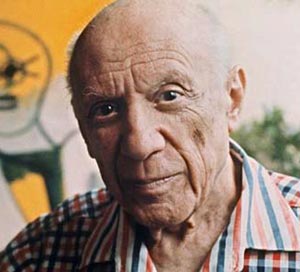
Where am I going with this?  Well, unfortunately, not all trainers, coaches and physical therapists share this same passion or possess this knack that I speak of.  Some are content after college (or certification) to be good enough and may not read literature, go above and beyond with continuing education, surround themselves with the best in the business or strive to be better each day.  Others may simply not have an innate ability to problem solve and synthesize given data to construct the right plan for the client.  Often trainers and clinicians default to what is easy or “what they know” as opposed to viewing each client in a different light.  In other words, they lack artistry.  They will never be revered like Picasso (pictured below).

picasso-head-shot


Continue reading…

I thought a fitting way to kick off the new year would be to share the top 10 things I learned or embraced that have most shpaed and impacted my training and rehab this past year.  In no particular order I will rattle these things off.  I hope at least one of these little pearls has a positive impact on your training and/or rehab as well.

  1. Often times it appears necessary to perform a biceps tenodesis or tenotomy in active adults undergoing a SLAP repair to ensure more predictable pain relief.  I heard this at a sports medicine conference last May and I can tell you those patients having this done alongside their shoulder surgeries seem to recover quicker with less pain relief.  With that said, keep in mind that SLAP tears are difficult to define and operate on as surgeons still do not have great agreement across the board on defining the extent of injuries and how to deal with them (operative vs. non-operative).
  2. Performance on the Functional Movement Screen (FMS) has little to no correlation with athletic performance.  I screened an NBA player and an NFL player this year who both failed the screen.  However, they obviously have mad athleticism and genetic ability.  Keep in mind the FMS is a valuable tool used to assess movement and expose injury risk patterns based on the 7 tests.
  3. Soft tissue therapy is undervalued and misunderstood by most lay people.  Assessing tissue restrictions and educating our clients to perform self myofascial release techniques is essential if they want to compete and remain healthy day in and day out.  Specific problem areas I have increased my focus on this year have been the psoas, soleus and posterior rotator cuff/joint capsule.  Click here for my soleus blog post.
  4. Core training is probably as much about not moving as it is about generating force with movement.  I read work from Stuart McGill and other smart people in the field, and the concepts of anti-rotation and anti-extension are sound concepts to explore and look more closely at.  Many times, performance in sport and life require us to resist movement and maintain position so strengthening the core to resist potentially harmful and stressful motions is and should be an important part of training and rehab programs.  Understanding how to facilitate and activate core musculature in the training to protect the spine and improve mobility/strength is key.  Click here for more on my core training.
  5. Hip dissociation is an important element to train as the lack of it can impact function and performance in a negative way.  We assess it on the active SLR in FMS and I see the lack of it show up on clinical exams all the time.  Whether it is HS tightness, hip flexor weakness or simply poor neuromuscular control, clients who are unable to effectively dissociate the hips are more prone to injury and limited performance.
    Continue reading…

Happy Holidays!

I wanted to take a brief moment to wish all of my readers a Merry Christmas and Happy New Year.

chrsitmas-tree

This time of year is one in which to look back and be grateful for all the blessings of the past year, as well as look forward to what the next year has to offer.

2011 has been a time of change as my family and I have embraced our new home in North Carolina.  I have thoroughly enjoyed my new position as supervisor and therapist at the Athletic Performance Center.  I work with a wonderful staff and a patient population consisting of youth to professional athletes.

As 2012 approaches, I look forward to new opportunities/goals such as becoming board certified in orthopaedic physical therapy, bringing Redcord training to our center as a master trainer, and launching a new program for runners.  I hope you have had a great year and I wish you continued health and prosperity in the year to come!

Stay tuned for some pearls of wisdom I will share in my next post about things I have learned and that have most impacted my rehab and training practice over the past year.  Thanks for all your questions, support and encouragement – keep it coming. Enjoy the Holidays with your family!